The Good, the Bad, and the Ugly: Christians and AI Music
AI is here. It’s reshaping how music is written, produced, and distributed. For Christian musicians, songwriters, and worship leaders, that shift is no longer theoretical. It’s already happening.
So how do we think about this? Not with fear. Not with hype. But with clarity.
This moment brings real opportunity, real danger, and real distortion. We need to see all three. The good. The bad. The ugly.
The Good
AI lowers barriers. People without musical training or gear can now explore melody, harmony, lyrics, and arrangement in ways that used to be impossible. That’s not inherently dangerous. Creativity isn’t reserved for experts.
We’re not threatened by tools, we’re responsible for how we use them. Scripture frames creativity as part of being made in God’s image (Genesis 1:26–27). So when a tool opens new doors for expression, our first response shouldn’t be suspicion. It should be discernment.
AI can also serve the church. It can help generate chord charts, arrange harmonies, mock up rehearsal tracks, and more. In that way, it’s no different than the software tools we already use: notation programs, DAWs, autotune, or MIDI instruments. The question isn’t whether the tool is artificial. It’s whether the content is true.
And ironically, AI may increase appreciation for real human craft. As automated music floods the platforms, listeners may begin to notice that not all songs are created equal. When everything starts to sound the same, excellence and conviction stand out more clearly.
The Bad
The flood is coming. Thousands upon thousands of AI-generated songs, cleanly produced, emotionally packaged, and theologically empty. More sound, less substance. That’s not new, but AI will multiply it.
This threatens to pull the standard for Christian music even lower. What works algorithmically may not work theologically. And what feels emotionally satisfying may be doctrinally hollow. There’s no filter in the tool for holiness, clarity, or spiritual maturity.
Another challenge is aesthetic sameness. AI pulls from existing trends. It tends to reinforce the common and repeat the predictable. It can mimic the style of modern worship songs down to the structure and hook, but it can’t create with spiritual authority.
The temptation to settle for what’s quick and easy will grow. And as the volume of music increases, the depth may decrease unless creators resist the pressure to compete with a machine’s speed.
The Ugly
The ugliest part isn’t the tech. It’s what it reveals about us.
There will be growing pressure to obscure how a song was made. To allow listeners to assume the lyric came from prayer or study when it really came from a prompt. To pass off AI-generated melodies as personal inspiration. To blur the line between assisted and authored.
This isn’t just a gray area. It’s a moral one. If we’re not honest about where our songs come from, we’re not just misleading our audience, we’re dishonoring Christ.
There’s also the danger of displacement. The gathered body of Christ is called to sing: to one another, in the presence of God, with hearts rooted in truth (Colossians 3:16). AI may support preparation, but it cannot worship. It can’t feel conviction. It can’t join the congregation in shared praise.
If the church ever begins to replace real voices with artificial ones, or allows generated music to push aside participation, we’ve traded something sacred for something efficient.
A Line in the Sand
AI isn’t moral, but it is certainly consequential. It will shape the music we hear, and it will tempt us to change the way we create. But the bigger question isn’t about algorithms. It’s about allegiance.
Not to genre. Not to tools. But to truth.
This moment will test what we believe about music’s purpose, message, and meaning. It will test whether we serve Christ—or just use His name as a genre tag.
Part 2 will explore what we do about it. But first, we need to see the moment clearly. The field is changing. The good is real. The bad is coming. The ugly is already here.
And the church cannot afford to close its eyes.
When published, Part Two is here.
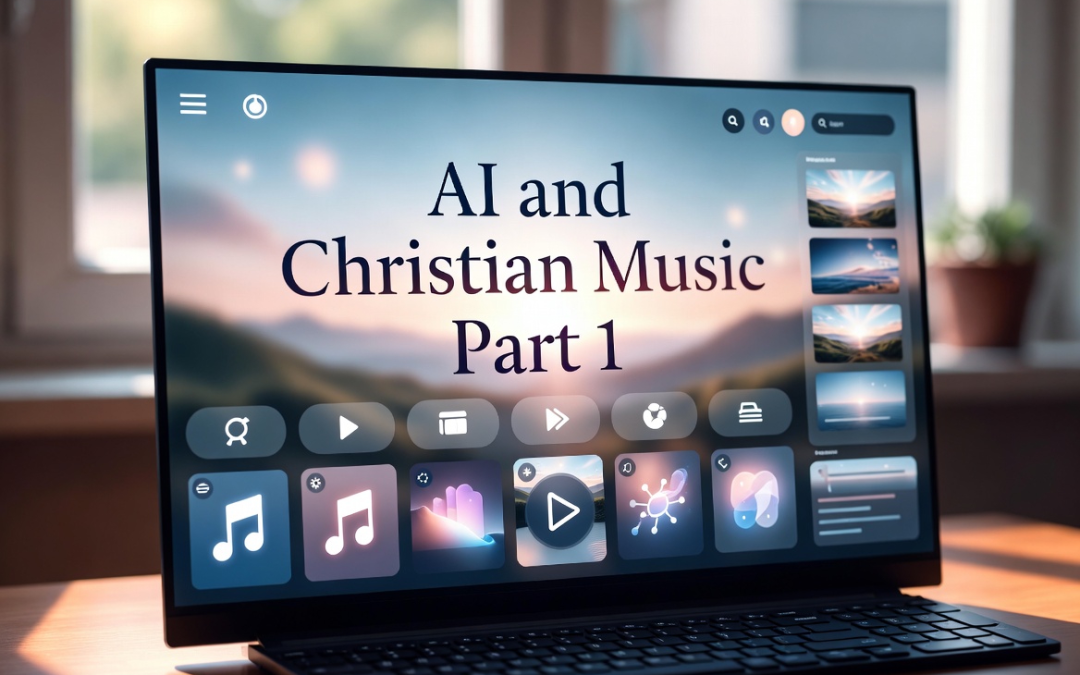
These are my original thoughts subsequently organized by ChatGPT 4o. Image generated by Grok. – Ben
Thank you for this information.